


Remote SIM Provisioning for IoT
Provision every device.
Touch none of them.
Full lifecycle control of eSIM profiles across your IoT fleet. No physical access required.
The challenge
Built for IoT at scale
Physical SIM management does not work when you are operating thousands of devices across multiple markets.
Without eSIM RSP
Field engineers for every SIM swap
High cost per visit. Scales poorly across large fleets.
Single-network lock-in
No flexibility when coverage or pricing changes.
Manual provisioning at scale
Workflows built for dozens, not hundreds of thousands.
No in-field updates
Devices cannot be reprovisioned without physical retrieval.
With Card Centric
Remote profile management
Provision and update every device over the air.
Multi-operator flexibility
Switch profiles in the field. No lock-in, no downtime.
Zero-touch at any scale
Automated flows handle large fleets without manual steps.
Full lifecycle in the field
Update, switch, or recycle profiles on live devices.
Platform architecture
How the platform works
Built to GSMA SGP.32 standards. Certified and interoperable with compliant eUICC enabled devices and chipset vendors.
Supports SGP.32 for new IoT deployments and SGP.02 for existing M2M device estates, all managed globally through a certified and redundant system.
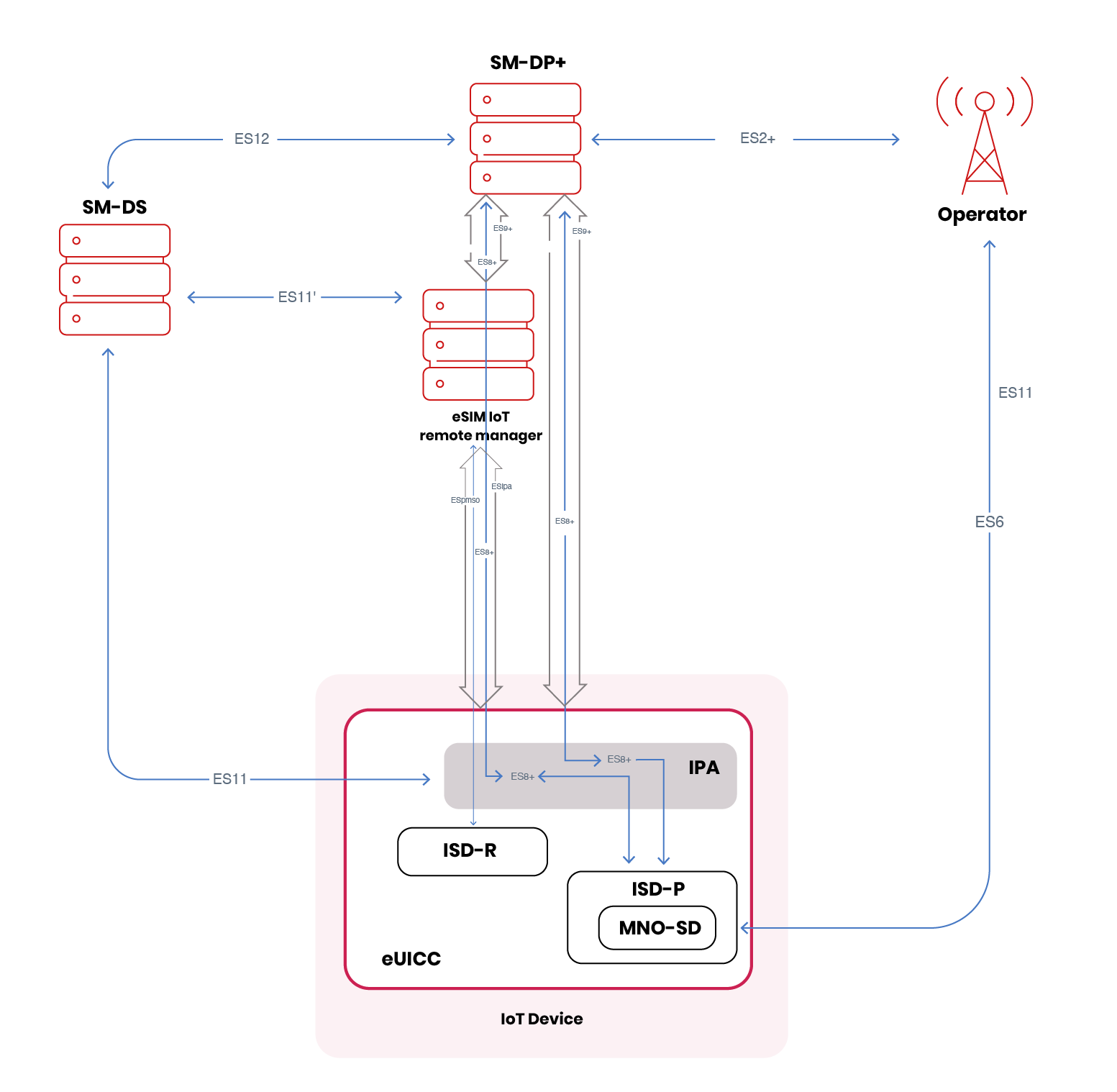
SM-DP+
Remote Provisioning
Server
Subscription Manager Data Preparation
Prepares and securely delivers encrypted eSIM profiles to each target eUICC over the air through a certified and secure channel.
EIM
eSIM IoT
Manager
Fleet Orchestration Layer
Orchestrates provisioning events across the fleet and provides the operational control layer for downloads, activations, and updates.
SM-DS
Discovery
Service
Asynchronous Profile Delivery
Lets devices check for pending profiles when they connect, without requiring a persistent link to the platform.
IPAe
IoT Profile
Assistant
IN-eUICC PROVISIONING AGENT
Handles eSIM profile discovery, download, and activation within the eUICC, supporting automated provisioning without a separate host-based agent.
Platform capabilities
What the platform supports
End-to-end profile lifecycle management, from factory floor to field deployment.
Over-the-air profile delivery
Push operator profiles to any SGP.32 eUICC without touching the device.
Zero-touch provisioning
Devices can automatically discover, download, and activate eSIM profiles based on operator-defined policies, without human intervention.
Remote profile switching
Update, swap, or delete operator profiles across deployed fleets from one interface.
Factory pre-provisioning
Load profiles at manufacture, ready to activate on first network contact.
M2M and SGP.32 coexistence
Manage legacy SGP.02 (M2M) deployments and new SGP.32 fleets through a single ecosystem.
SaaS or on-premise
Cloud deployment or full on-premises hosting. Your infrastructure, your choice.
Use cases
Where it is used
Suited to any deployment where devices need to be connected, updated, or migrated remotely and at scale.

Smart energy
Meters, grid monitoring, demand response and distribution automation.

Industrial IoT
Manufacturing automation, predictive maintenance, and condition monitoring.

Asset and fleet tracking
Logistics, cold chain, container and vehicle management across borders.
Connected health
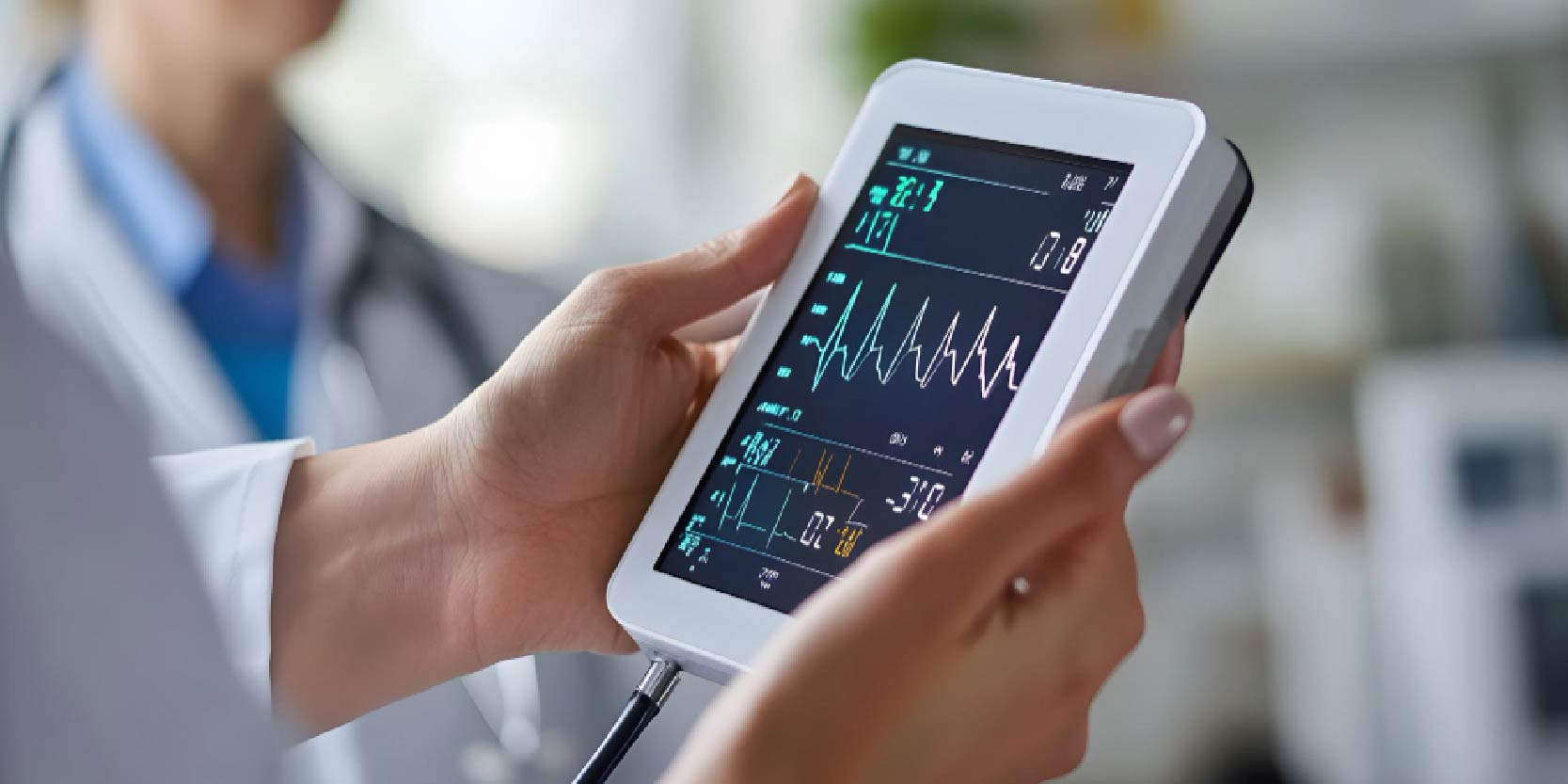
Remote patient monitoring, wearable diagnostics, and hospital asset tracking.

Automotive
Telematics, in-vehicle connectivity, and cross-border roaming management.

Smart cities
Infrastructure sensors, environmental monitoring, parking and traffic systems.
Certified to the highest standards
Built on open standards
Our solutions are fully compliant with GSMA SGP.32 and support SGP.02 (M2M) for organisations managing existing device estates in parallel with new deployments.
Current standard
GSMA SGP.32
IoT RSP. EIM-orchestrated, zero-touch, constrained device ready.
Legacy support
GSMA SGP.02
Full support for existing M2M estates, managed in parallel with SGP.32.
Consumer eSIM
GSMA SGP.22
Consumer RSP for smartphones and wearables, within the same platform environment.
 GSMA certified
SGP.02, SGP.22, SGP.32
 GlobalPlatform certified
 Trusted Connectivity Alliance member
Ready to deploy
Talk to our team
Platform architecture, integration requirements, or deployment options. We work with operators, device manufacturers, and enterprise IoT teams across telecom, energy, healthcare, and logistics.
Contact our teamFAQ
Common questions
The process of delivering, activating, and managing operator profiles on embedded SIMs (eUICCs) over the air, without physical device access. GSMA SGP.32 is the current standard governing this for IoT devices, covering profile preparation, distribution, and full lifecycle management.
SGP.32 is the GSMA remote SIM provisioning specification built for IoT devices: headless, resource-constrained, and often deployed at scale in hard-to-reach locations. It introduces the eSIM IoT Manager (EIM) to orchestrate provisioning server-side, removing the need for device-side user interaction.
SGP.02 was designed for traditional machine-to-machine deployments with reliable connectivity. SGP.32 is purpose-built for constrained IoT devices, with a lighter architecture and fully server-orchestrated lifecycle management. Card Centric RSP solutions support both in parallel for organisations managing mixed device estates.
Devices automatically discover, download, install, and enable eSIM profiles based on operator-defined policies, without human intervention. This capability is enabled by the IoT Profile Assistant (IPA) on the device working together with the eIM platform.
Both. Cloud SaaS supports fast deployment without infrastructure overhead. On-premises hosting is available for organisations requiring data sovereignty, regulatory compliance, or direct control over their provisioning environment.
Yes, provided that the deployed device includes an SGP.32-compliant eUICC and supports the required communication protocols. Once validated, the platform can remotely manage the device throughout its lifecycle, including profile downloads, profile updates, operator switching, and profile recycling.
For devices deployed with SGP.02 (M2M) eUICCs, management depends on the capabilities and interoperability of the existing eUICC and the incumbent SM-DP/SM-SR platform. Transitioning these deployments to an alternative remote management platform may require additional integration work and interoperability validation, and in some cases may not be fully supported.